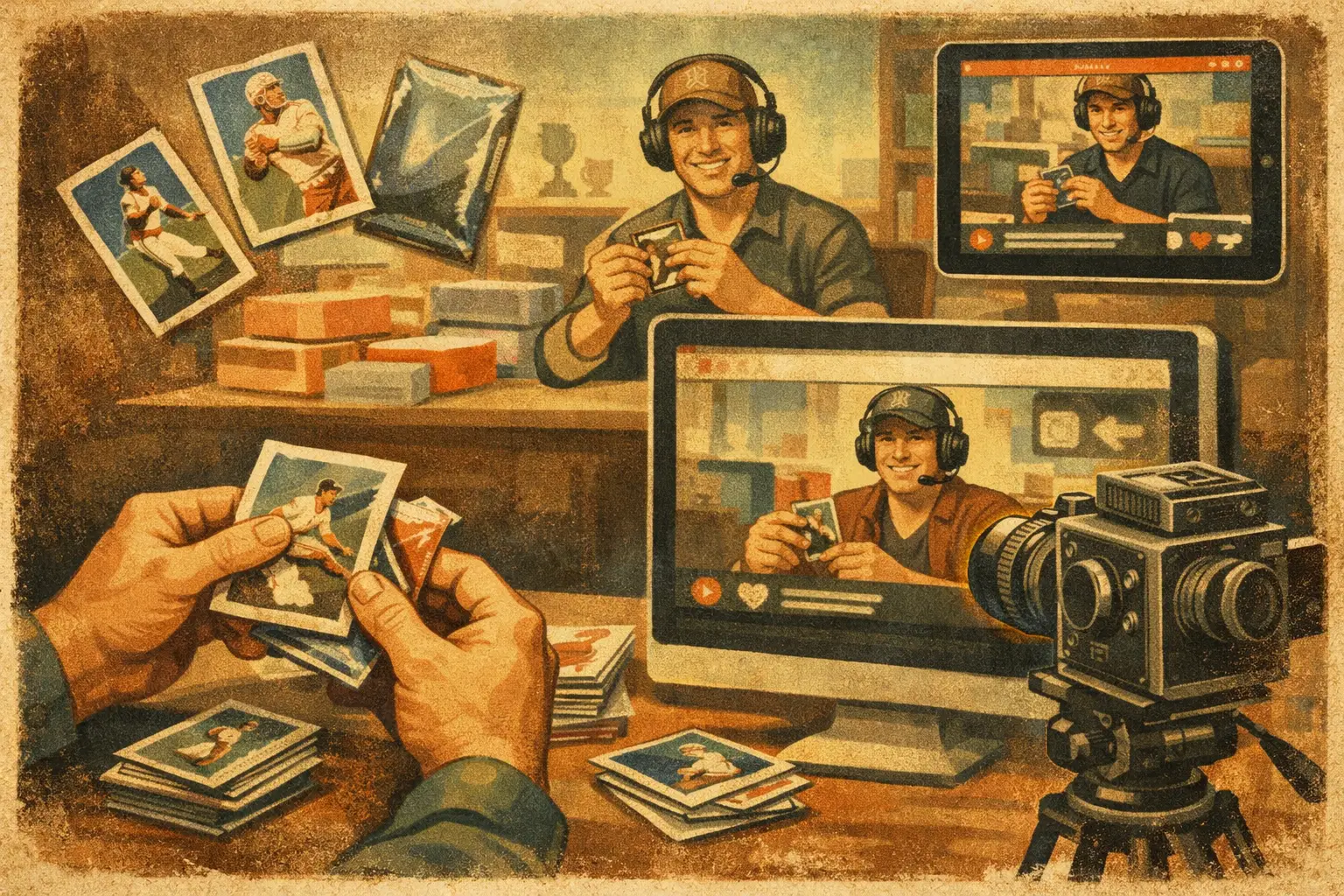
The best part of a live break is that nobody knows what’s sitting in the next pack until it happens on camera. That little pause before the wrapper comes off, chat starts firing off predictions, and everybody locks in on the table – that’s exactly why people want to know how live card breaks work before they jump in.
If you’ve only seen clips or caught a stream halfway through, the whole thing can look fast. Numbers get assigned, names go up on screen, packs start moving, and suddenly someone in chat is losing their mind over a huge pull. Once you know the setup, though, it’s pretty simple. A live card break is just a real-time opening of sealed product where the cards are divided among participants based on a format announced before the break starts.
How live card breaks work in real time
At the most basic level, a breaker gets sealed product ready for a livestream. That could be a booster box, collector box, case, bundle, or a mix built around a special event. Participants claim spots before the break, and each spot gives them some kind of right to cards from the opening.
That right depends on the break format. In some breaks, you buy a specific team, color, faction, set slot, or character category. In others, spots are randomized after everyone joins. For trading card games, the format might be tied to color identity, rarity bands, product slots, or other clearly defined categories. The important part is that the rules are explained before the packs get cracked.
Then the stream starts, the sealed product is shown on camera, and the break happens live. The host opens everything where viewers can see it, sorts cards according to the break rules, and reacts in real time with chat. That last part matters more than people think. Live breaks are part opening, part event, part community chaos in the best way.
The formats that shape how live card breaks work
Not every break runs the same way, and that’s where beginners can get tripped up. If you’re joining one for the first time, you want to know what your spot actually means.
A pick-your-spot break is the easiest to understand. You choose a category up front, and any cards that match that category are yours. If a break is built around specific set slots or clearly labeled outcomes, this can feel straightforward because you know what you’re rooting for from the start.
A random break adds more suspense. You buy a spot first, then names and categories are randomized on stream so everyone can watch the assignment happen. Some people love that because it lowers the barrier to getting into premium products. Others prefer choosing because they want control. Neither is better across the board – it depends on whether you’re chasing a certain lane or just here for the ride.
There are also hit-based formats, where the focus is on premium cards, inserts, serialized pulls, or other defined “hits” rather than every single card opened. These can move faster and keep the spotlight on the biggest moments, but you need to read the rules carefully. “All cards ship” and “hits only” are two very different experiences.
What happens before the packs open
The pre-break setup does a lot of heavy lifting. A good host will show the sealed product, explain the format, confirm the participant list, and make the randomization process visible if random spots are involved. That transparency is a huge part of trust.
In most quality breaks, the host also explains shipping expectations, what happens with base cards, and how edge cases are handled. Multi-category cards, foil variants, bonus items, and box toppers can all create questions if the rules are vague. The cleaner the setup, the more fun the actual opening becomes because nobody is stuck arguing when a big card lands.
This is also where live chat starts shaping the energy. People call their shots, joke around, root for friends, and build hype before the first pack is touched. That social piece is a big reason live breaks feel different from just watching a prerecorded box opening later.
The opening itself is part entertainment, part sorting job
Once the break is underway, the host opens packs on camera and places cards into piles based on the break rules. That may sound simple, but it takes attention and consistency, especially when product has weird configurations or surprise inserts.
A strong breaker keeps everything visible, names notable pulls as they happen, and moves at a pace that feels exciting without turning the table into a mess. Too slow, and the stream drags. Too fast, and viewers can’t follow what belongs where. The sweet spot is where the suspense stays high but the process still feels organized.
This is where live card breaks really earn their audience. Pulling a huge mythic, foil chase card, or rare promo is fun on its own. Pulling it live while chat explodes, lights flash, redemptions pop, and everyone starts typing in all caps is a different kind of fun. It feels shared.
That’s why the format works so well on platforms built around interaction. A stream can turn one box opening into a whole event, especially when the audience can participate beyond just watching. On channels built around community mechanics, viewers might also be earning points, triggering on-stream effects, or joining giveaways while the break is happening. That extra layer turns the break into more than a transaction.
Randomization, fairness, and trust
If you’re new, this is usually the real question behind how live card breaks work: how do you know it’s fair?
The answer starts with visibility. Randomizations should happen on stream. Sealed product should be shown clearly before opening. Rules should be stated before any results are known. If something unusual happens, the host should address it in the moment instead of hoping nobody notices.
No break format removes all disappointment. Random assignment can leave you with a weaker slot. Pick-your-spot can cost more for the most desirable categories. Hit-only breaks can feel amazing when you land something big and rough when you don’t. Fair does not mean everybody gets equal value every time. Fair means the process is clear, consistent, and followed as advertised.
That distinction matters. Breaks are part entertainment, part collecting, and part chance depending on the structure. Anyone joining should understand that the excitement comes with variance. Some nights you spike a monster card. Some nights your best moment is the chat reaction to someone else doing it.
What happens after the break
After the stream, the cards are usually sorted, packed, and shipped to the right participants. Depending on the break, that may include every card, only qualifying cards, or only hits. Again, this should never be a mystery.
Sorting is not glamorous, but it’s one of the biggest parts of the process. A clean post-break system helps avoid mix-ups and keeps people coming back. Sleeving key cards, labeling orders clearly, and communicating shipping timelines all matter. If a breaker is amazing on camera but sloppy after the stream, people notice fast.
For regular viewers, the afterglow is part of the appeal too. People post their hits, talk through the wild moments, and come back for the next scheduled stream because they want another shot at that energy. The best communities keep the momentum going between breaks instead of treating each one like a one-off event.
Why people keep coming back
The obvious answer is the cards. Big pulls are fun, sealed product is exciting, and the live reveal adds real suspense.
But that’s only half the story. People come back because live breaks feel like hanging out with a crowd that actually cares about the same stuff you care about. You’re not watching a silent pack opening in a vacuum. You’re reacting with other collectors, cheering on ridiculous luck, and building little inside jokes that only make sense if you were there when the pack got ripped.
That’s where a stream-first brand can really shine. A channel like MasterCopter doesn’t just show cards – it gives the audience ways to get involved, rack up rewards, jump into chat, and turn the whole night into something more alive than a standard box opening. When the stream feels like a place instead of just content, people stick.
Should you join a live break?
If you like collectible card games, enjoy livestream energy, and want a more social way to experience openings, live breaks make a lot of sense. If you want total control over exactly which singles you get for your collection, buying cards directly may be the better move. That’s not a knock on breaks. It’s just knowing what kind of fun you’re signing up for.
The sweet spot is going in with clear expectations. Read the format, know what ships, understand the randomness, and join streams that make the rules obvious. Do that, and the whole thing starts to click fast.
Then all that’s left is the best part: show up, claim your spot if it makes sense for you, and be in chat when the next pack opens. Sometimes the hit is the card. Sometimes it’s the moment everyone remembers after the stream ends.