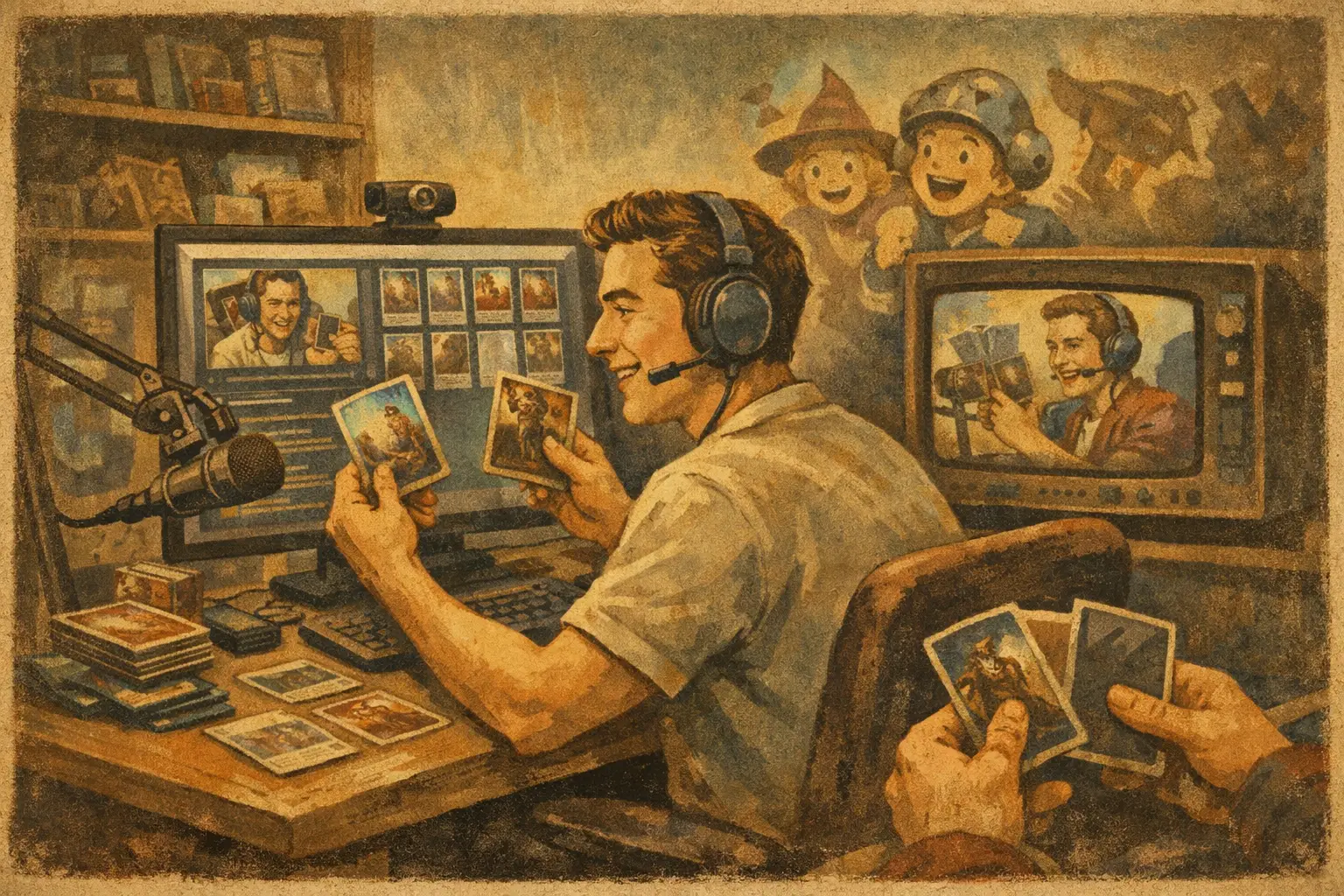
A great twitch trading card stream lives or dies in the first few minutes. Not because the cards are bad, or the set is weak, or the hits are cold. It comes down to energy. If the stream feels like a camera pointed at a box, people leave. If it feels like anything could happen and chat actually matters, people stay.
That difference is bigger than most creators think.
Trading card fans already have plenty of ways to look at cards. They can watch short clips, check market prices, scroll spoilers, and read set reviews all day. Live content has to offer something those formats cannot. It has to feel shared, unpredictable, and worth showing up for in real time. That is the sweet spot for a trading card stream on Twitch, especially when the audience loves booster openings, chat chaos, and a little friendly competition.
Why a twitch trading card stream works best live
The appeal starts with suspense, but suspense alone is not enough. Watching a pack get cracked is fun because no one knows what is inside. Watching that happen with a room full of people reacting together is better. The hit lands harder when chat explodes, when someone calls the rare before the reveal, or when the whole stream starts spamming emotes because the box is suddenly on fire.
That is why the strongest streams are built around participation, not just product. A collector booster box opening can carry a show for a while, but the real glue is the crowd. Viewers want to feel like they were there for the pull, there for the joke, and there for the wild moment everyone talks about later.
This is also where Twitch has an edge over static video. The platform rewards momentum. If viewers are chatting, reacting, redeeming channel rewards, and pushing the energy forward, the stream stops feeling like content and starts feeling like an event.
The best twitch trading card stream is not just card reveals
Cards matter. Of course they do. Nobody is pretending the product is irrelevant when people are tuning in for Magic: The Gathering openings or collectible card hype. But cards are only the starting point.
A stream becomes memorable when the opening is wrapped in a format people want to return to. Maybe there is a recurring Monday night show people build into their week. Maybe chat can trigger lights, sound effects, or goofy on-stream punishments. Maybe regulars earn points over time and cash them in for rewards that make the stream feel like a game inside the show.
That extra layer changes the relationship between creator and audience. Instead of asking people to sit back and watch, the stream invites them to mess with the vibe, celebrate hits together, and chase little wins of their own. That is a much better reason to come back next week than “maybe there will be a nice mythic.”
There is a trade-off here, though. Too many gimmicks can bury the cards. Too little interaction makes the stream flat. The sweet spot is using community features to amplify the opening, not distract from it.
What viewers actually want from live card content
Most viewers want a mix of three things: entertainment, access, and the chance to participate.
Entertainment is obvious. They want real reactions, fun pacing, and that electric feeling where a normal box can suddenly become legendary. Access matters because live streams feel personal. People like hearing the host react in the moment, answer chat, and make the room feel open rather than staged.
Participation is where things get sticky for creators who still think content is one-way. A Twitch audience does not only want to consume. They want to affect what happens. That might mean voting on what gets opened next, earning points through watch time, entering giveaways, calling shots in chat, or redeeming channel rewards that create little bursts of chaos on screen.
When those pieces click, viewers are not just watching a product get opened. They are part of the show.
What separates a forgettable stream from a community one
Plenty of creators can set up a camera and open packs. Far fewer can build a room people miss when they are gone.
The difference usually starts with consistency. Not perfection – consistency. A recurring schedule gives the audience something to rally around. If viewers know there is a signature stream night with real energy behind it, they are much more likely to make it part of their routine.
The next difference is recognition. The best communities reward regulars without making newcomers feel shut out. That is a tricky balance. If every joke is too inside and every reward only benefits long-time viewers, new people bounce. If there is no payoff for loyalty, regulars lose some of the emotional pull that keeps communities tight.
This is why point systems, redemptions, giveaways, and chat-driven moments work so well when handled right. They give people a reason to stick around and a way to feel seen. A viewer who earns points over time and turns them into something fun or physical is no longer just background traffic. They are invested.
At MasterCopter, that kind of participation is the whole point. The stream is not built like a display case. It is built like a hangout with booster packs, rewards, and enough chat energy to turn one great pull into a full-room celebration.
Why giveaways and rewards matter – and where they can go wrong
Giveaways get attention fast. That is the upside. They create urgency, boost chat activity, and give people one more reason to stay until the end of the stream.
But rewards by themselves do not build loyalty. If the only reason people show up is free stuff, they disappear the second the prizes slow down. The smarter move is using giveaways as a spark, then backing them up with a format that is genuinely fun to be part of.
The same goes for loyalty systems. A points system can be great because it turns watch time into progress. It gives casual viewers a path toward becoming regulars. Still, it only works if the rewards feel playful and visible. If points exist but do not change the experience, they become background noise.
The best streams make rewards part of the entertainment. A mystery box, a karaoke redemption, a light-control reward, or a chat-triggered moment on camera feels alive. It gives the audience a hand on the wheel.
Building momentum in a twitch trading card stream
Momentum is the hidden engine. A strong stream does not wait around for something exciting to happen. It creates small peaks all night.
That can come from pacing the box opening well, teasing milestone rewards, reacting hard to medium hits instead of only huge ones, and keeping chat involved between packs. It can also come from smart structure. A stream that opens cold, peaks in the middle, and drifts off with no finish will feel weaker than one that keeps stacking moments toward a finale.
This is one reason recurring segments work so well. The audience likes knowing there is a familiar rhythm, but they also want room for chaos. A good live card show has both. It gives viewers enough structure to know what they are joining and enough unpredictability to make each night feel different.
There is also a technical side to this. Audio matters more than many creators expect. Clear camera work matters. Lighting matters. Card visibility matters. None of that is glamorous, but if people cannot see the foil treatment or hear the host over muddy sound, the experience loses punch fast.
Good production does not need to feel corporate. It just needs to stay out of the way so the reactions, cards, and community can carry the night.
Why the future of card content is more interactive, not less
Trading card content is getting crowded. More openings, more creators, more clips, more instant reactions. That makes pure access less special than it used to be. Anyone can post a rare pull. Not everyone can host a live room people want to spend hours in.
That is why interactive streams stand out. They turn the hobby from something you watch into something you join. For collectors, that scratches the same itch that makes the hobby fun in the first place. It is not only about owning the card. It is about the story around it, the people who saw it happen, and the feeling attached to the moment.
The streams that keep growing will understand that. They will treat chat like a feature, not a distraction. They will build reward systems that feel fun instead of forced. They will make each event feel bigger than a pile of packs on a desk.
If you are looking for a twitch trading card stream worth your time, that is the real test. Not whether the host opens expensive boxes. Not whether every stream has a monster hit. Ask whether it feels alive. Ask whether chat changes the room. Ask whether missing a night feels like missing out.
When a stream gets that right, the cards are only half the reason people show up. And that is exactly what makes them come back.
1 Comment
How Do I Start a Live Stream on Twitch? – MasterCopter
May 14, 2026[…] creator personality matters. A stream with chat energy, small rituals, recurring segments, and live reactions will always beat a technically perfect stream that feels flat. That’s a big reason […]